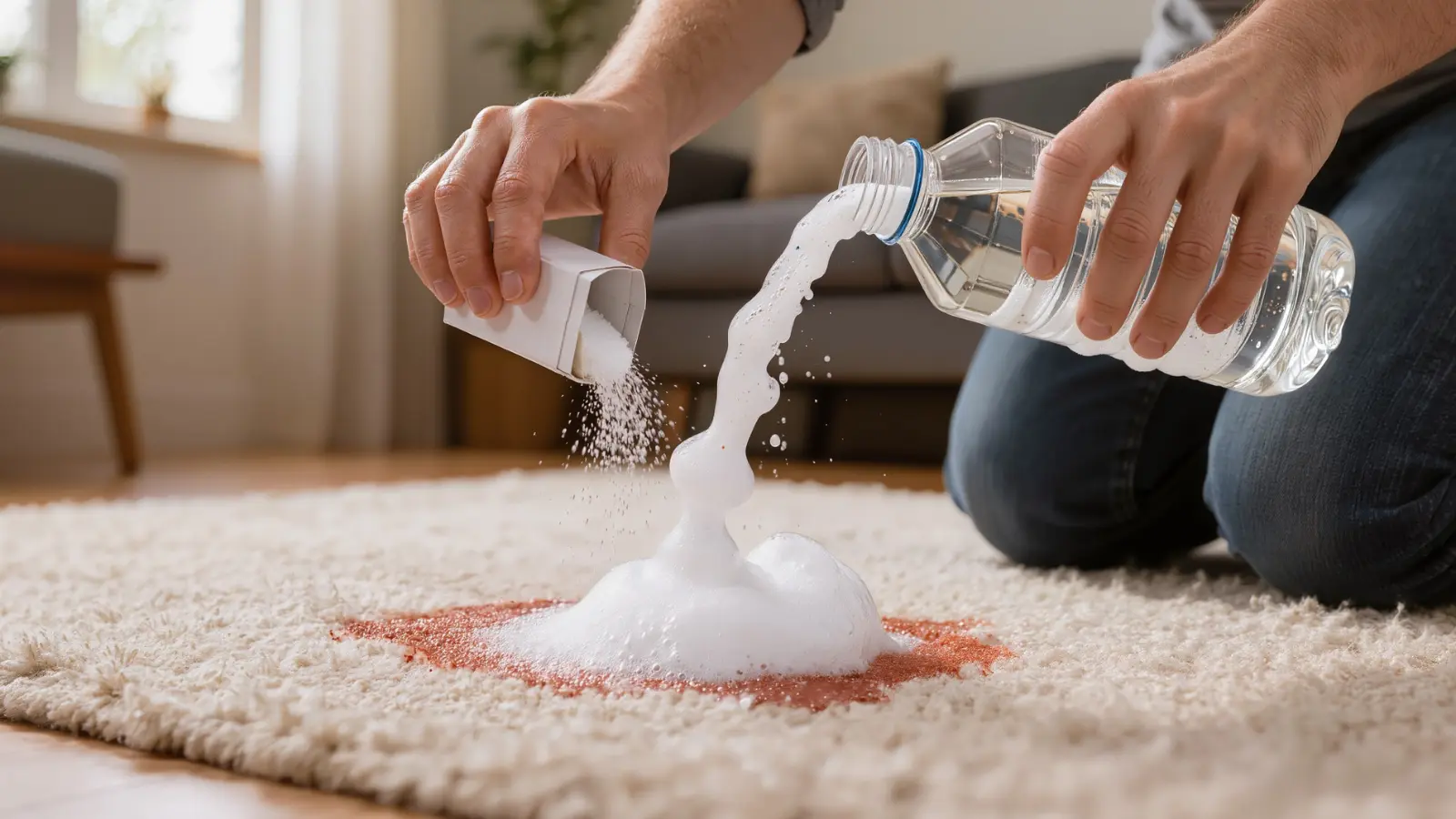
Open TikTok, Instagram, or YouTube and you will find thousands of carpet cleaning "hacks" promising miracle results with stuff already in your kitchen. Some of them genuinely work. Some of them do nothing. And a few of the most popular ones are quietly damaging carpets in a way that no professional cleaning can fully undo.
We are not saying this to scare you into calling us. We are saying it because after 24 years of cleaning carpets throughout San Mateo, the Peninsula, and the greater Bay Area, we have been called out to fix the aftermath of viral hacks more times than we can count — yellowed spots that will not come out, matted wool, bleached patches on colored carpet, and re-soiling that gets worse every month. Much of that damage was permanent by the time we arrived.
So here is an honest, no-hype breakdown: which trending carpet hacks are actually fine, which ones you should stop doing today, and what genuinely works instead. Consider this the "technician's reply" to your For You page.
Why So Many Viral Hacks Fail
Before we go hack by hack, it helps to understand the single mistake that connects almost all of them: the myth of the universal cleaner.
Viral videos almost always present one trick as the answer for every carpet and every stain. But carpet is not one material. Wool, nylon, polyester, olefin, and triexta all react differently to heat, moisture, acidity, and cleaning agents. What refreshes a synthetic apartment carpet can permanently rough up a wool area rug. The colored dyes in patterned carpet react to oxidizers that a plain beige carpet might shrug off.
Every quality carpet and rug also comes with a care label and manufacturer cleaning guidelines — the same guidelines that keep your warranty valid. Viral hacks ignore all of it. That is why the same trick that "worked amazing" in one video permanently ruins someone else's floor in the comments.
The second problem is moisture. Most hacks involve soaking a spot and leaving it. Water that sits in carpet backing and padding — especially in our humid, coastal Bay Area climate — becomes a breeding ground for mold, mildew, and odor. You cannot see it happening, and by the time you smell it, the damage is in the padding.
With that framework, let's get specific.
The Hacks That Are Actually Damaging Your Carpet
1. Baking Soda + Vinegar (the big one)
This is the most viral carpet hack on the internet, and it is one of the worst. The fizzing looks satisfying and feels scientific, but here is what is really happening: baking soda is a base, vinegar is an acid, and when you combine them they neutralize each other into mostly salty water and carbon dioxide. The dramatic foam is not "lifting" anything — it is the reaction canceling both ingredients out.
Worse, on natural fibers like wool, that violent pH swing from acidic to basic can roughen the fiber surface permanently, leaving it prone to matting and sometimes causing yellowing or whitening that no professional process can reverse. And baking soda is a fine abrasive powder that works its way deep into carpet backing where vacuums cannot fully retrieve it — it builds up over time, attracts moisture, and can even damage vacuum motors.
What to do instead: For most fresh spills, blot with cool water first. For a stubborn spot, use a small amount of pH-balanced carpet spot cleaner made for your fiber type — not a science-fair reaction.
2. Bleach or "just a little" bleach solution
Bleach shows up constantly for white or light carpets. Do not do it. Bleach is far too aggressive for carpet fibers and backing, and on any colored or patterned carpet it strips the dye and leaves a permanent lighter blotch. Even on white carpet it can weaken and yellow the fibers over time. There is no safe dilution that is worth the risk to your flooring.
3. Hydrogen peroxide on colored carpet
Peroxide is a genuine stain fighter and professionals do use it in controlled situations — but it is an oxidizer, which means on colored or patterned carpet it can bleach the dye just like a mild bleach would. The viral videos showing it on white carpet leave out that it can permanently lighten anything with color. If you would not pour it on a colored shirt, do not pour it on your carpet without testing an unseen area first.
4. Dawn (or any dish soap) as a carpet shampoo
Dish soap cuts grease on plates because you rinse it off completely. Carpet you cannot rinse. Whatever soap you scrub in stays in the fibers as a sticky residue that actively attracts dirt — so the spot you "cleaned" turns into the dirtiest, fastest-re-soiling patch in the room within weeks. This is one of the most common reasons we get called to re-clean a spot that "keeps coming back." A tiny amount of dish soap in a lot of water, fully blotted and rinsed, can work in a pinch — but the way it is shown online, dumped straight on, does more harm than good.
5. Shaving cream
The classic "shaving cream removes any stain" video. Shaving cream is mostly soap and air, so at best it is a weak, foamy detergent — and it leaves the same dirt-attracting residue as dish soap, plus fragrances and additives that can react with certain fibers. It is not a miracle; it is a mess waiting to re-soil.
6. Drowning a stain (over-wetting)
Almost every hack tells you to saturate the spot. Over-wetting is one of the most damaging things you can do to carpet. Excess water soaks past the fibers into the backing and padding, where household air movement cannot dry it. In the Bay Area's damp climate, that trapped moisture leads to mildew, musty odor, and even delamination of the carpet backing. The stain you were chasing becomes a mold problem you cannot see.
7. Renting the biggest machine and going slow to "really soak it"
Rental machines have their place, but the viral instinct to over-saturate applies here too. Rental units heat and extract at a fraction of professional power, so they leave far more water and detergent behind. Combined with the "soak it good" advice, you get long drying times, residue, and re-soiling. We covered this fully in our guide on professional carpet cleaning versus DIY if you want the deeper comparison.
The Hacks That Are Actually Fine
We are not here to tell you every home remedy is bad. Being honest means saying which ones genuinely work:
Blotting fresh spills with cool water and a clean white cloth — this is exactly what professionals do first. Work from the outside of the spill toward the center, and blot, never rub.
The no-shoes rule — not flashy, but it is the single most effective thing you can do for your carpet. It cuts tracked-in dirt and outdoor contaminants dramatically and extends the life of your carpet more than any spray.
Regular, slow vacuuming in overlapping passes — genuinely effective at removing surface grit before it grinds into the fibers.
A small amount of enzymatic cleaner on fresh pet accidents — the right tool for organic messes, as long as you are treating a fresh, small spot. For anything set-in or soaked into the padding, that becomes a job for professional pet stain and odor removal, because urine penetrates far deeper than a surface spray can reach.
Cornstarch or salt on a fresh grease or wine spill to absorb it — fine as an emergency first response to soak up excess before it sets, as long as you vacuum it up promptly and do not scrub it in.
The pattern here: gentle, immediate, low-moisture responses to fresh spills are good. Aggressive chemistry and soaking are where it goes wrong.
What Actually Works: The Honest Method
Here is the approach that carpet manufacturers, the Carpet and Rug Institute, and every reputable professional actually recommend — and it is not complicated:
For fresh spills: Act immediately. Blot up as much as possible with a clean white cloth, working inward. Apply a little cool water to dilute, and blot again. For organic spills, follow with an enzymatic spot cleaner made for carpet. Do not over-wet, do not scrub, and do not reach for the kitchen chemistry.
For set-in stains, high-traffic dinginess, pet odor, or a whole-room refresh: This is where hot water extraction — real professional steam cleaning — does what no hack can. Water heated to around 200°F plus pH-balanced solution is injected into the pile and immediately extracted along with the dirt, allergens, and bacteria, leaving carpets genuinely clean and dry within hours rather than soaked for days. We break down exactly how that works, and how it compares to low-moisture methods, in our guide on steam cleaning versus dry cleaning.
The honest truth is that most "why won't this stain come out" problems are the result of a viral hack that set the stain, added residue, or bleached the fiber before a professional ever saw it. The best thing you can do for a stain you cannot lift with plain water is to stop treating it and let a professional assess it before it becomes permanent.
When to Skip the Hacks and Call a Pro
Reach out to a professional — rather than experimenting — when you are dealing with:
Set-in or repeat stains that plain-water blotting will not lift; pet urine that has soaked into the padding or keeps returning after cleaning; any colored or patterned carpet where you are tempted to use bleach or peroxide; a musty or damp smell after a previous DIY attempt; or an entire room that looks dull and gray no matter how much you vacuum. In every one of these cases, another round of internet hacks is more likely to lock the problem in than fix it.
We serve homes and businesses throughout San Mateo, Burlingame, Redwood City, Palo Alto, San Francisco, and across the Peninsula and Bay Area — and we would genuinely rather give you honest advice over the phone than have you set a stain permanently.
Frequently Asked Questions
Is baking soda actually bad for carpet?
A light sprinkle vacuumed up quickly is usually harmless for deodorizing, but the viral baking-soda-and-vinegar combination is the problem. The two neutralize each other, so they do not clean effectively, and the pH swing can permanently roughen and yellow natural fibers like wool. Baking soda powder also builds up in carpet backing where vacuums cannot fully remove it, and can damage vacuum motors over time. We do not recommend it as a cleaning method.
Does vinegar clean carpet?
Diluted white vinegar can help neutralize some odors and lift certain fresh spots on synthetic carpet, but it is acidic and can damage natural fibers, set some stains, and does not "deep clean" anything the way videos claim. It is not a substitute for extraction, and it should never be combined with baking soda.
Can I use Dawn dish soap on my carpet?
We do not recommend it. Because carpet cannot be rinsed the way dishes can, dish soap leaves a sticky residue that attracts dirt and makes the treated spot re-soil faster than the rest of the carpet. It is one of the most common causes of stains that "keep coming back."
Is hydrogen peroxide safe for carpet stains?
Only with caution. Peroxide is an oxidizer and can bleach or lighten colored and patterned carpet permanently. Professionals use it in controlled situations on specific fibers, but for a homeowner it is easy to create a light spot that cannot be undone. Always test an unseen area first, and avoid it entirely on colored carpet.
I already tried a hack and made it worse. Can it be fixed?
Sometimes — it depends on the fiber, the product used, and how long it has set. Residue and over-wetting are often recoverable with professional extraction. Bleaching and dye damage from bleach or peroxide usually are not. The sooner you stop treating it and have it looked at, the better the odds. Call us at (650) 678-2858 and we will give you an honest assessment.
How often should I have my carpets professionally cleaned?
Most manufacturers recommend every 12 to 18 months to maintain warranty coverage. Homes with pets, kids, allergies, or heavy traffic benefit from every 6 to 9 months. Regular professional cleaning also means fewer emergency stains to panic-Google in the first place.
The Bottom Line
The internet is not all wrong — blotting fast, keeping shoes off, and vacuuming well are genuinely good habits. But the flashy chemistry hacks that get the most views are also the ones most likely to leave permanent damage: baking soda and vinegar, bleach, peroxide on colored carpet, dish soap, shaving cream, and drowning a stain in water.
After 24 years serving the Bay Area with fair rates, thorough work, and a 5-star rating across every platform, our honest advice is simple: treat fresh spills gently with water, and for anything beyond that, let a professional handle it before a hack makes it permanent. Every job we do is backed by a 100% satisfaction guarantee — if it is not right, we come back and make it right at no additional cost.
Get your free quote and schedule online — no obligation, same-day availability for residential and flexible commercial scheduling. Or call us directly at (650) 678-2858 and talk to a real person who knows carpet and knows this area.
Before you try the next viral hack, it is worth one honest conversation. For more, explore our full carpet cleaning services across the Peninsula and Bay Area.
Experience the All-Cities Difference
Trusted by Bay Area families for over 24 years. Our truck-mounted steam cleaning system delivers deeper, longer-lasting results. Fair Rates, instant quotes, and 100% satisfaction guaranteed.